
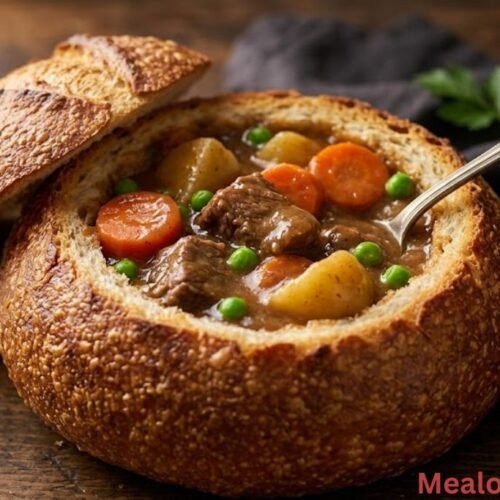
There is nothing quite like a steaming, thick dinner served inside a crispy, edible vessel on a chilly evening. Imagine tender pieces of succulent meat, soft root vegetables, and a rich, velvety gravy soaking into the fluffy interior walls of a fresh loaf. This classic comfort meal brings together deep, savory tastes and texturally satisfying elements in every single spoonful. It transforms a standard dinner routine into a fun, interactive dining experience that looks impressive but remains incredibly straightforward to prepare.
Table of Contents
Choosing to serve Beef Stew in a Bread Bowl means creating a cozy masterpiece without spending hours handling complicated kitchen techniques. The secret lies in letting the meat simmer slowly until it becomes melt-in-your-mouth tender, allowing the natural starches from the vegetables and diced tomatoes to naturally thicken the savory broth. Thick, rustic crusts hold everything together beautifully, ensuring that every bite is packed with maximum moisture and robustness without any leaking. It is a reliable, satisfying option that guarantees empty plates and smiles around the table.
Why You’ll Love Beef Stew Bread Bowls
- Unbeatable Texture: The contrast between the crunchy outer crust, the soft, moist bread crumb inside, and the thick gravy creates a truly comforting mouthfeel with every spoonful.
- Maximum Flavor with Simple Steps: By searing the meat and slow-simmering it with classic herbs like thyme and rosemary, basic ingredients transform into a deeply savory masterpiece.
- No Extra Dishes needed: Serving dinner directly inside the loaf means fewer bowls to wash after a long day, making cleanup a complete breeze.
- Fun and Interactive: Tearing off pieces of the gravy-soaked walls to eat along with the meat and vegetables makes this a highly engaging meal that everyone at the table will look forward to.
Equipment Needed for This Recipe
Before starting, gather a few basic kitchen tools to make the preparation smooth and simple:
- A large, heavy-bottomed pot or Dutch oven
- A sharp chef’s knife and cutting board
- A sturdy wooden spoon or heat-resistant spatula
- A small mixing bowl
- A pastry brush (optional, for brushing butter)
- A ladle for serving
Ingredients
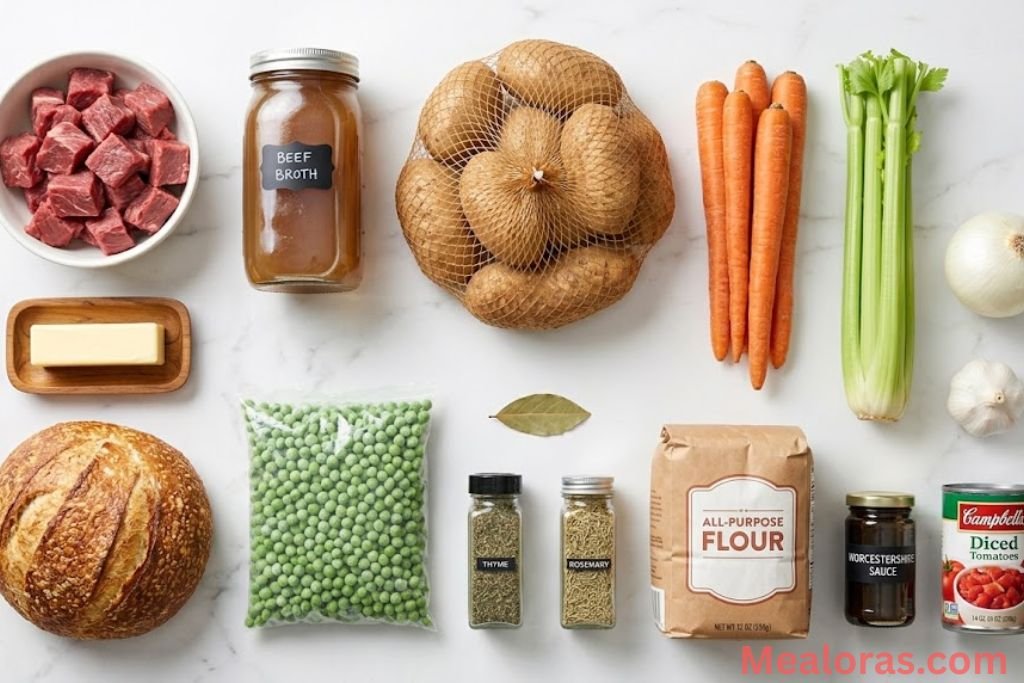
For the Core Elements:
- 1.5 pounds stewing beef, cut into bite-sized cubes
- 4 round bread loaves (such as sourdough or sturdy rustic Boules)
- Melted butter for brushing the loaves (optional)
For the Coating & Initial Seasoning:
- 2 tablespoons all-purpose flour
- A pinch of salt and black pepper
For the Veggies & Aromatics:
- 2 tablespoons vegetable oil (for searing)
- 1 medium yellow onion, chopped
- 2 garlic cloves, minced
- 3 medium carrots, sliced into thick rounds
- 3 medium potatoes, diced into sturdy chunks
- 2 stalks celery, chopped
- 1 cup frozen peas
For the Savory Simmering Liquid & Herbs:
- 14-ounce can diced tomatoes (with juices)
- 4 cups beef broth
- 2 teaspoons Worcestershire sauce
- 1 teaspoon dried thyme
- 1 teaspoon dried rosemary
- 1 whole bay leaf
- Extra salt and black pepper to taste
Step-by-Step Instructions
Step 1: Coat the Beef
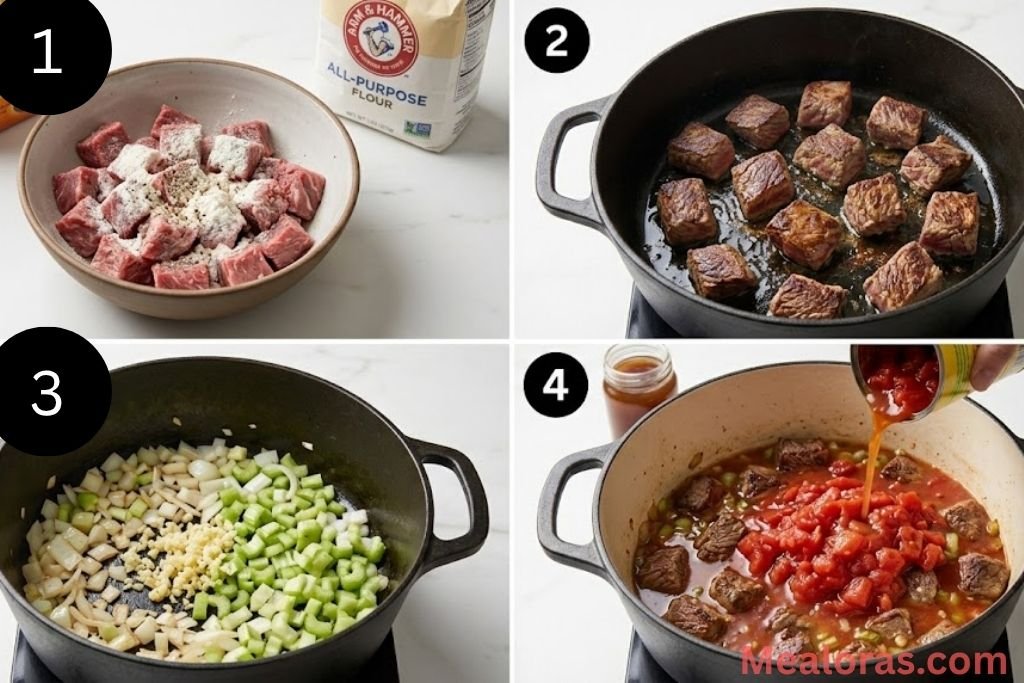
Place the two tablespoons of all-purpose flour along with a generous pinch of salt and black pepper into a small bowl and mix briefly. Pat the cubed pieces of stewing beef dry with a paper towel to remove excess surface moisture. Toss the meat thoroughly in the flour mixture until every side of each cube is lightly coated, shaking off any extra flour.
Step 2: Sear the Meat
Heat the vegetable oil in your heavy-bottomed pot or Dutch oven over medium-high heat until it shimmers. Add the flour-coated meat cubes in a single layer, ensuring you do not overcrowd the pan so they brown instead of steaming. Let the pieces cook undisturbed for a couple of minutes on each side until a deep, golden-brown crust forms, then transfer the seared beef to a clean plate.
Step 3: Cook the Aromatics
Lower the stove heat to medium and add the chopped yellow onion and chopped celery to the remaining oil and flavorful bits left in the pot. Stir consistently for about three to four minutes until the vegetables begin to soften and turn translucent. Drop in the minced garlic cloves and stir rapidly for exactly one minute, allowing the aroma to bloom without letting the garlic scorch.
Step 4: Deglaze and Build the Base
Pour the 14-ounce can of diced tomatoes with all their juices into the pot, using your wooden spoon to firmly scrape up all the delicious, browned bits stuck to the bottom. Pour in the four cups of beef broth and add the two teaspoons of Worcestershire sauce, stirring well to combine the liquids.
Step 5: Season and Simmer
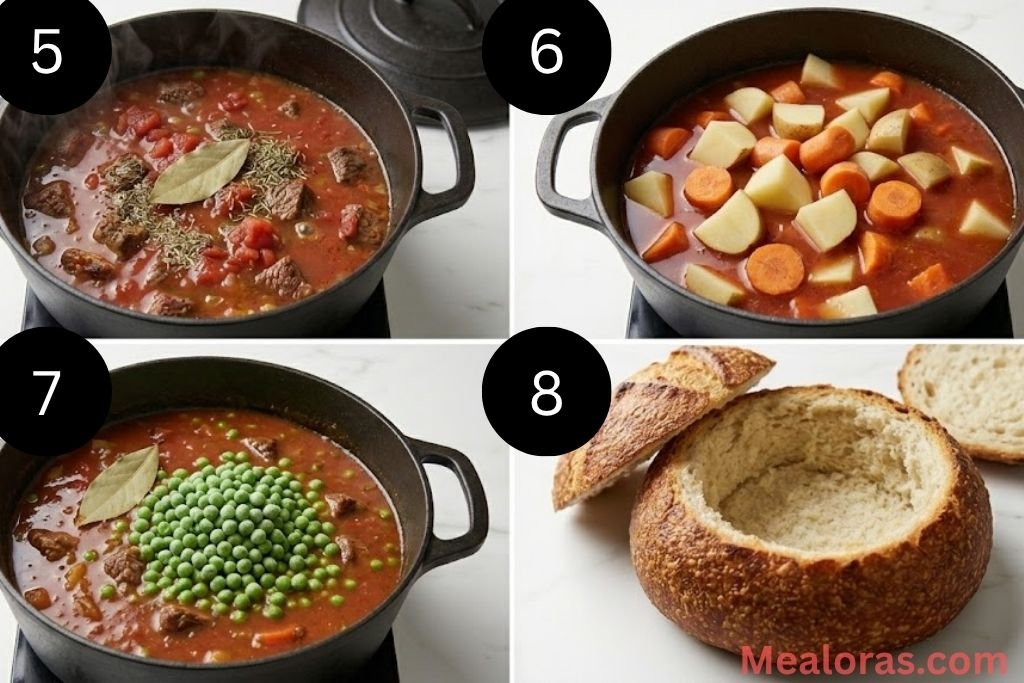
Return the seared beef and any collected juices back into the pot, then stir in the dried thyme, dried rosemary, and the single bay leaf. Bring the liquid to a gentle boil over medium-high heat, then immediately lower the heat to low, cover with a tight-fitting lid, and let it simmer gently for about one hour until the meat starts to become tender.
Step 6: Introduce the Hard Vegetables
Carefully lift the lid and stir in the sliced carrots and diced potatoes, making sure they are mostly submerged in the seasoned simmering broth. Put the lid back on the pot and continue cooking over low heat for another thirty to forty minutes, or until a fork easily slides through the center of the potatoes and carrots.
Step 7: Finish with the Peas
Just before finishing, stir the frozen peas into the hot mixture and let everything cook uncovered for about five minutes. The remaining heat will perfectly plump the green peas while allowing the rich gravy to achieve a thick, velvety consistency that easily coats the back of a spoon. Taste the gravy and add an extra pinch of salt or pepper if desired, then remove and discard the bay leaf.
Step 8: Hollow and Assemble the Bread Bowls
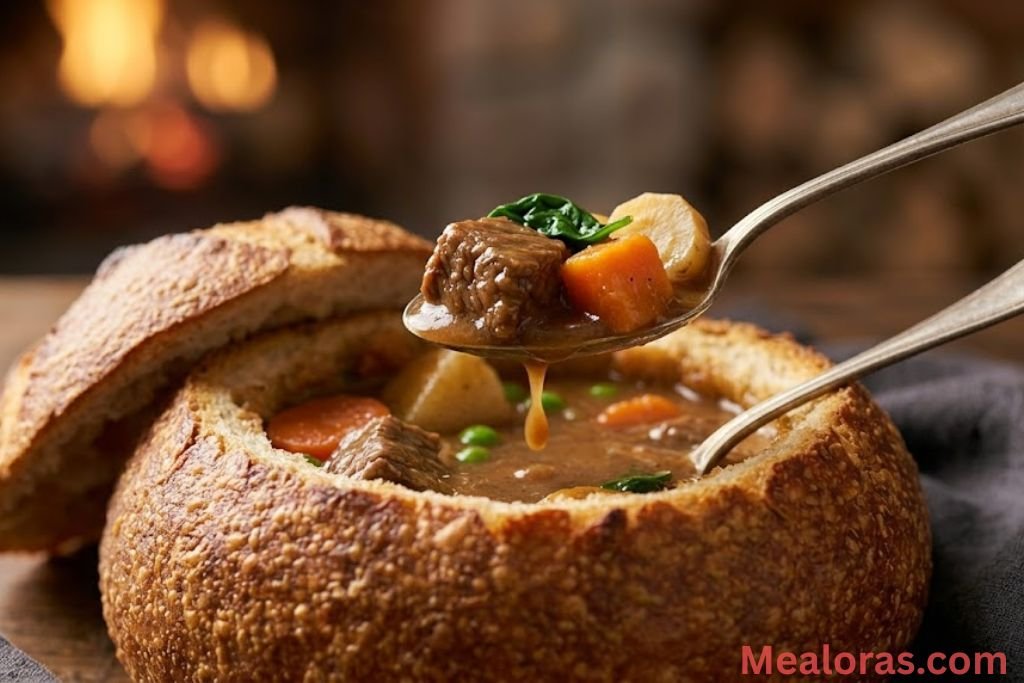
Take a sharp serrated knife and slice off the top portion of each round loaf to create a lid. Use your fingers to gently hollow out the inside of the loaf, leaving a sturdy wall about one inch thick all around the sides and bottom to prevent any gravy from leaking. If desired, brush the inside and edges with a little melted butter and toast them in the oven for a few minutes, then ladle the thick, steaming mixture generously into the hollowed centers.
Tips & Variations for Success
Achieving the perfect balance of texture and depth requires paying attention to a few simple details during the cooking process. For instance, searing the meat at a high temperature is essential because it locks in natural juices and creates a flavorful foundation for the gravy. Skipping this step can lead to grey, less flavorful meat cubes that lack a satisfying texture.
If you enjoy exploring hearty, savory sauces paired with tender cuts, trying a comforting alternative like a copycat buona beef tuna genovese recipe provides incredible culinary inspiration. Learning how different combinations of seasonings and slow-simmering techniques enrich liquids can help you understand how to master thick, restaurant-quality sauces at home.
Valuable Cooking Pointers:
- Avoid Soggy Bottoms: Toasting the hollowed loaves in an oven at 350°F (175°C) for about five to seven minutes before filling them creates a wonderfully crispy interior barrier.
- Keep Vegetables Uniform: Cut the potatoes and carrots into large, similar-sized pieces so they cook evenly and do not break down into mush during the extended simmering process.
- Thickening Adjustment: If the gravy feels too thin after cooking, whisk a tablespoon of cornstarch with two tablespoons of cold water, stir it into the simmering liquid, and boil for two minutes.
Easy Flavor and Ingredient Swaps:
- Root Vegetable Alternatives: Swap out standard potatoes for sweet potatoes or add parsnips and turnips for a slightly sweeter, earthy flavor profile.
- Green Additions: Replace the frozen peas with chopped green beans or fresh baby spinach leaves stirred in during the final minutes of cooking.
- Bread Choices: If traditional sourdough isn’t available, look for Italian loaves, pumpernickel, or whole-wheat boule varieties with thick, firm crusts.
Storage & Serving Suggestions
Leftover stew stores incredibly well, often tasting even better the next day as the herbs and seasonings continue to meld together beautifully. Allow the mixture to cool down completely to room temperature before transferring it into airtight glass or plastic storage containers. Store the containers in the refrigerator for up to three to four days, keeping any extra loaves completely separate in a dry bag.
When ready to reheat, place the desired portion into a small saucepan over medium-low heat, adding a splash of extra broth or water to loosen the gravy, and stir frequently until steaming. Avoid freezing the assembled bowls, but the filling itself freezes beautifully in airtight freezer bags for up to two months. Simply thaw it overnight in the refrigerator before warming it back up on the stove.
To create a balanced and satisfying meal, serve this dish alongside a crisp green garden salad tossed with a simple vinaigrette. Roasted asparagus spears or steamed broccoli florets also provide a wonderful, vibrant contrast to the rich, savory depth of the meal. Always serve with the hollowed-out bread pieces on the side, as they are perfect for dipping into the remaining velvety sauce.
Frequently Asked Questions
Can regular sandwich bread be used instead of round loaves?
No, regular sliced sandwich bread cannot support the weight or moisture of a thick liquid. Round, rustic loaves with hard, sturdy crusts are necessary to prevent the liquid from leaking through the bottom.
How do I prevent the liquid from soaking through the bottom?
Leaving at least a one-inch thick layer of fluffy crumb at the bottom and sides when hollowing out the loaf creates an effective barrier. Additionally, baking the hollowed loaves for a few minutes before filling them helps maintain structural integrity.
What cut of beef works best for this slow-simmered recipe?
Chuck roast cut into uniform cubes is the absolute best option because it contains ideal marbling that breaks down beautifully during a long simmer. Pre-cut stew meat packs sold at grocery stores also work wonderfully.
Is it necessary to remove the bay leaf before serving?
Yes, it is highly recommended to fish out the whole bay leaf before ladling the mixture into the loaves. Bay leaves remain rigid and sharp even after cooking, making them a choking hazard if accidentally swallowed.
Why is my meat still tough after cooking?
If the meat feels tough, it simply needs to simmer for a little longer. Tough cuts of meat require sustained low heat over time to break down the firm connective tissues into tender pieces.
Can frozen vegetables be used instead of fresh ones?
Yes, frozen carrots and potatoes can be used, but they should be added during the last twenty minutes of simmering instead of the full duration to prevent them from becoming overly soft.
How do I store the extra bread bowls?
Keep un-hollowed extra loaves wrapped tightly in plastic wrap or placed inside a sealed plastic bag at room temperature for up to two days. Do not refrigerate them, as this can cause them to go stale faster.
Can this recipe be completed without any flour?
The all-purpose flour used to coat the meat acts as the primary thickening agent for the gravy. If flour is omitted entirely, the result will be a thin broth rather than a thick, rich sauce.
What should I do with the bread that was scooped out?
Save the inner pieces to serve right alongside the completed meal for extra dipping. Alternatively, toss them with a little olive oil and garlic powder, then bake them to create crunchy croutons for salads.
Is this recipe suitable for making ahead of time?
The filling can easily be prepared a day in advance and kept in the refrigerator. When dinner time arrives, simply reheat the filling thoroughly on the stove while prepping and warming fresh loaves.
Conclusion
Bringing a rich, thick Beef Stew in a Bread Bowl to the dinner table is the ultimate way to share comfort and warmth with loved ones. The simple combination of perfectly seared meat, tender root vegetables, and a seasoned gravy creates an unforgettable texture that makes every spoonful deeply satisfying. Because it relies on basic kitchen tools and straightforward steps, anyone can master this comforting dish on their very first attempt with absolute confidence.
Taking the time to slow-cook dinner allows simple ingredients to transform into a memorable culinary experience. The contrast between the crunchy exterior crust and the moist, flavorful interior makes this an engaging meal that turns an ordinary evening into something special. Gather the ingredients, fire up the stove, and enjoy the delightful process of creating a classic, reliable favorite.
If this warm, comforting meal brought satisfaction to your table, please consider sharing this recipe with friends and family members who appreciate simple, delicious ideas. Pinning it to a favorite dinner board helps ensure that this reliable guide is always just a quick click away whenever cozy weather calls for a hearty meal.
Beef Stew in a Bread Bowl

Ingredients
- Core Elements:
- 1.5 pounds stewing beef cut into bite-sized cubes
- 4 round bread loaves such as sourdough or sturdy rustic Boules
- Melted butter for brushing the loaves optional
- Coating & Initial Seasoning:
- 2 tablespoons all-purpose flour
- A pinch of salt and black pepper
- Veggies & Aromatics:
- 2 tablespoons vegetable oil
- 1 medium yellow onion chopped
- 2 garlic cloves minced
- 3 medium carrots sliced into thick rounds
- 3 medium potatoes diced into sturdy chunks
- 2 stalks celery chopped
- 1 cup frozen peas
- Savory Simmering Liquid & Herbs:
- 14- ounce can diced tomatoes with juices
- 4 cups beef broth
- 2 teaspoons Worcestershire sauce
- 1 teaspoon dried thyme
- 1 teaspoon dried rosemary
- 1 whole bay leaf
- Extra salt and black pepper to taste
Instructions
- Mix the all-purpose flour, a pinch of salt, and black pepper in a small bowl, then thoroughly toss the dry cubed stewing beef in the mixture until evenly coated.
- Heat the vegetable oil in a heavy-bottomed pot over medium-high heat and sear the beef cubes until a deep, golden-brown crust forms on all sides, then transfer the meat to a plate.
- Lower the heat to medium and cook the chopped onion and celery in the remaining oil until soft and translucent, then add the minced garlic and stir rapidly for one minute.
- Pour the can of diced tomatoes with juices into the pot and use a wooden spoon to firmly scrape up all the flavorful browned bits stuck to the bottom, then stir in the beef broth and Worcestershire sauce.
- Return the seared beef to the pot, stir in the dried thyme, dried rosemary, and the bay leaf, then bring to a boil before lowering the heat, covering, and simmering gently for one hour.
- Lift the lid and stir in the sliced carrots and diced potatoes, then cover again and continue simmering for thirty to forty minutes until the vegetables are completely tender.
- Stir the frozen peas into the hot mixture, cook uncovered for five minutes until the gravy is thick and velvety, then taste for seasoning and remove the bay leaf.
- Slice off the tops of the round loaves, gently hollow out the centers leaving a sturdy one-inch wall, brush with melted butter and toast if desired, then ladle the steaming mixture generously into the bowls.
Notes
• Uniform Veggies: Cut the potatoes and carrots into large, similar-sized pieces so they cook evenly without breaking down during the long simmer.
• Make-Ahead Option: The filling can easily be prepared a day in advance and kept in the refrigerator, allowing you to simply reheat the filling and prep fresh loaves at dinner time
Mealoras your go-to for simple, flavorful recipes! From quick weeknight dinners to sweet treats and family favorites, we make cooking easy, fun, and delicious for everyone in the kitchen.
